

On-Grid vs Off-Grid vs Hybrid Solar:Which Solar System Is Best for Your Home?
On-Grid vs Off-Grid vs Hybrid Solar
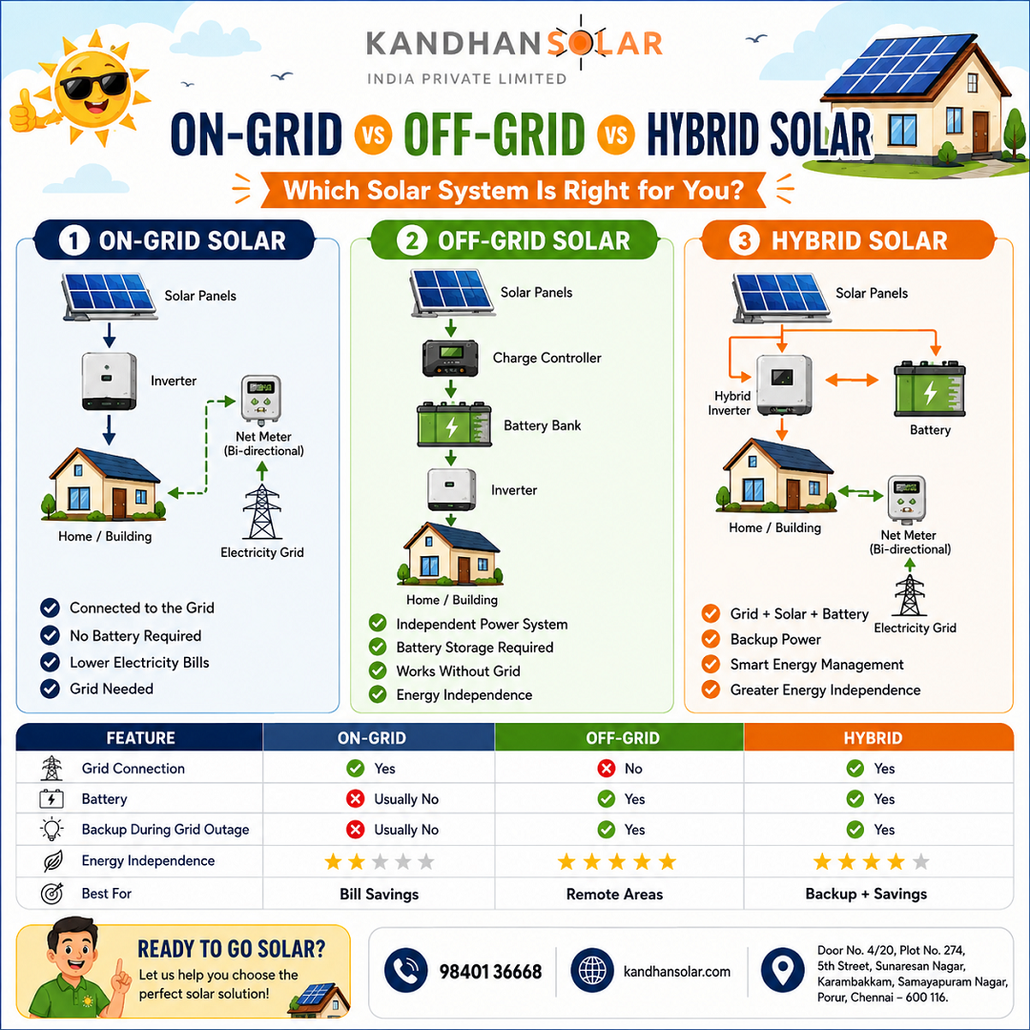
Choosing the right solar system for your home can help you reduce electricity bills and manage power cuts. In this guide to on-grid vs off-grid vs hybrid solar, we explain how each system works, its benefits, battery requirements and key differences. If you are planning rooftop solar installation in Chennai or elsewhere in Tamil Nadu, Kandhan Solar can help you choose a solution based on your electricity consumption, roof space and budget.
What Is an On-Grid Solar System?
An on-grid solar system is connected to your home’s electrical system and the electricity grid. During the day, your home can use solar electricity directly. Surplus generation may be exported to the grid according to the applicable metering arrangement.
How it works: Solar panels → Solar inverter → Home → Grid
A standard on-grid system generally does not require batteries for normal operation.
Benefits of On-Grid Solar
- Lower upfront cost than battery-based systems
- Suitable for many grid-connected homes
- Can reduce electricity purchased from the grid
- No battery replacement cost
Does On-Grid Solar Work During a Power Cut?
Normally, a standard grid-connected solar inverter shuts down during a grid outage for safety reasons. An on-grid system by itself should therefore not be treated as a backup power system.
What Is an Off-Grid Solar System?
An off-grid solar system operates independently of the electricity grid. It typically uses solar panels, an inverter/charge controller and batteries.
The batteries store energy for later use, including when solar generation is unavailable. How it works: Solar panels → Inverter/charge controller → Home + Battery
Benefits of Off-Grid Solar
- Can operate without a grid connection
- Battery storage provides energy for later use
- Useful where grid electricity is unavailable or unreliable
- Provides greater energy independence
Because batteries are required, off-grid systems can have a higher initial cost, and batteries eventually need replacement.
What Is a Hybrid Solar System?
A hybrid solar system combines solar generation, battery storage and grid connectivity.
It can use solar power during the day, store energy in batteries and use stored energy when required.
How it works: Solar panels → Hybrid inverter → Home + Battery + Grid
Depending on the design, a hybrid system can provide backup power for selected loads during grid outages.
Benefits of Hybrid Solar
- Solar power generation
- Battery energy storage
- Grid connection
- Backup capability when properly designed
- Better energy management
The main trade-off is that adding batteries increases the initial investment.
How to Choose the Best Solar System for Your Home
There is no single answer for every homeowner.
Choose On-Grid If
You have reliable grid electricity and your main goal is to reduce the amount of electricity you purchase from the grid.
Choose Off-Grid If
You need an independent electricity system because grid electricity is unavailable or unsuitable for your location.
Choose Hybrid If
You want solar generation and battery backup and are comfortable with the additional investment.
What Should You Consider Before Choosing?
1. Monthly electricity consumption
Review your recent electricity bills and understand your normal usage.
2. Rooftop space
Available roof area affects how many panels can be installed.
3. Power-cut requirements
If backup is important, discuss battery capacity and essential loads with your installer.
4. Budget
Battery-based systems generally require more upfront investment.
5. Daytime electricity usage
Daytime consumption can affect how useful direct solar generation is.
6. Future requirements
Consider future additions such as air conditioners, EVs, water heaters or other high-consumption appliances.
How Much Solar Capacity Does Your Home Need?
The right solar capacity is not determined simply by house size or the number of people living in the home.
It depends on monthly electricity consumption, appliance usage, rooftop space, sunlight, desired generation and system configuration.
Two homes of similar size may need different solar capacities because their electricity consumption can be very different.
Is Solar Worth Installing in Chennai?
Chennai receives substantial sunlight through much of the year, making rooftop solar a practical option for many homes and businesses.
Actual generation depends on system size, orientation, shading, weather, equipment and maintenance. A professional site assessment can help determine a suitable system.
Why Professional Solar Installation Matters
Solar installation is more than placing panels on a roof. A properly designed system should consider:
- Roof structure
- Panel positioning
- Shading
- Inverter selection
- Electrical safety
- Cable sizing
- Mounting structure
- System capacity
- Maintenance requirements
Choosing the right system at the beginning can help avoid unnecessary costs later.
How Kandhan Solar Can Help
At Kandhan Solar, we help homeowners understand their solar requirements before choosing a system.
Your requirement should be evaluated based on factors such as electricity consumption, rooftop conditions and backup requirements.
Whether you are considering an on-grid, off-grid or hybrid solar system, the right choice should be based on your actual needs.
Thinking about installing solar at your home? Contact Kandhan Solar to discuss your requirements and explore a suitable solar solution.
website:https://kandhansolar.com/
Phone: 9840136668

